


14x fresher data
Business-critical data freshness improved from 7 hours to 30 minutes
AI-native DataOps platform
Dagster is the operational layer that structures how data is built, observed, and delivered, so both teams and AI agents can rely on it.



Adopted worldwide
Reliable data infrastructure is the foundation for faster teams, sharper decisions, and AI that actually delivers.
Business-critical data freshness improved from 7 hours to 30 minutes
Developer onboarding shrank from 3 months to 1 day

Over 1,000 dbt models have been automated with zero downtime

Execution time has dropped from 2.5 hours to 10 minutes

Game insights are delivered within 15 minutes of the final out

Manual operational tasks have been eliminated, saving 8 hours a week
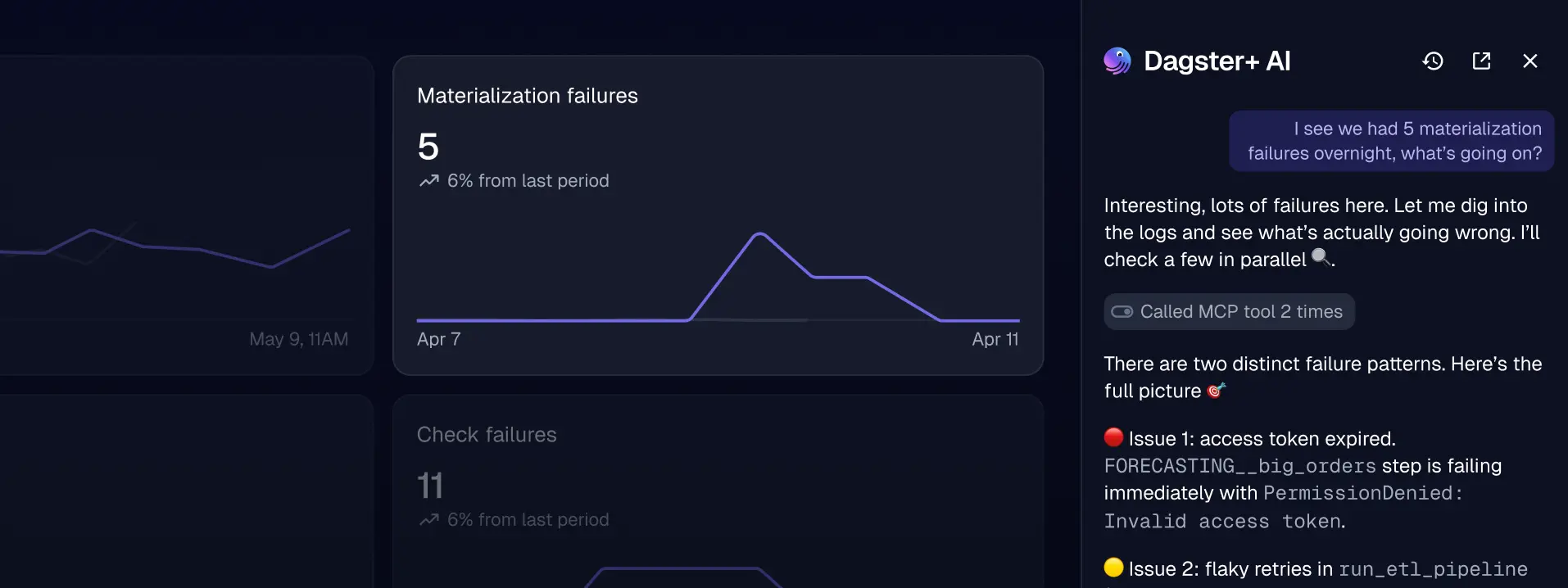
Meet Dagster AI
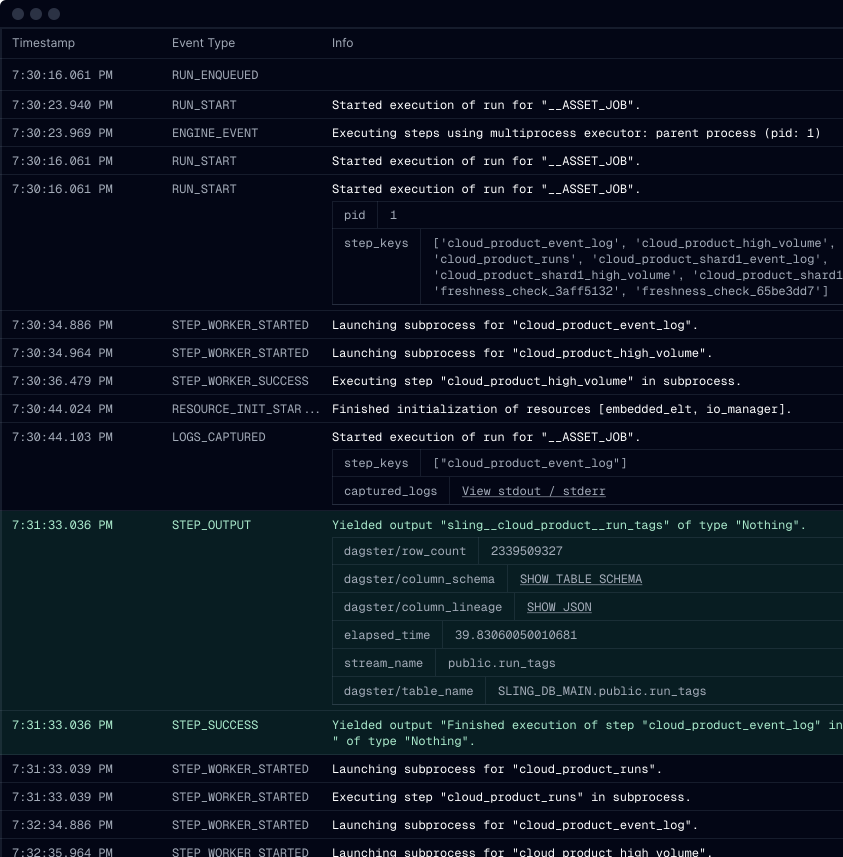
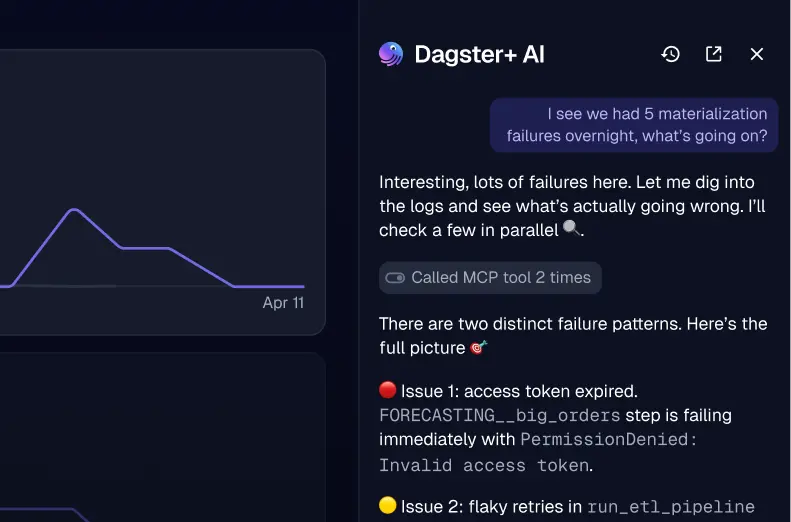
Dagster AI runs on the context Dagster already has: assets, runs, lineage, freshness, failures, and automation history, so teams can diagnose issues, explain behavior, and take action faster and more confidently than ever.
The platform
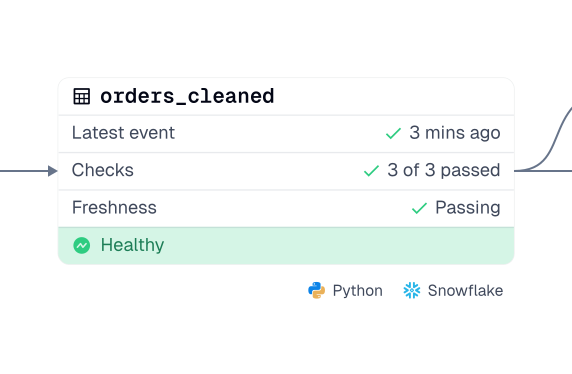
Build and run asset-based pipelines across any tool in your stack. Engineers, stakeholders, and agents all work from the same operational foundation.
See it in a demo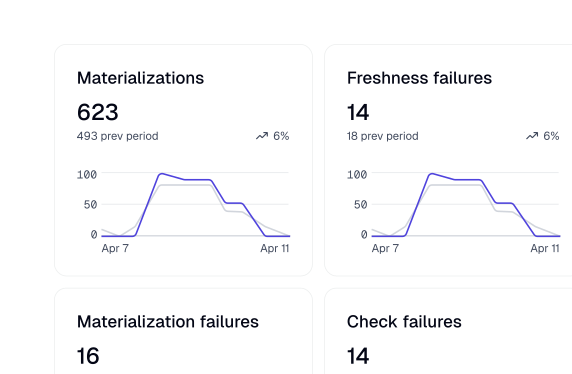
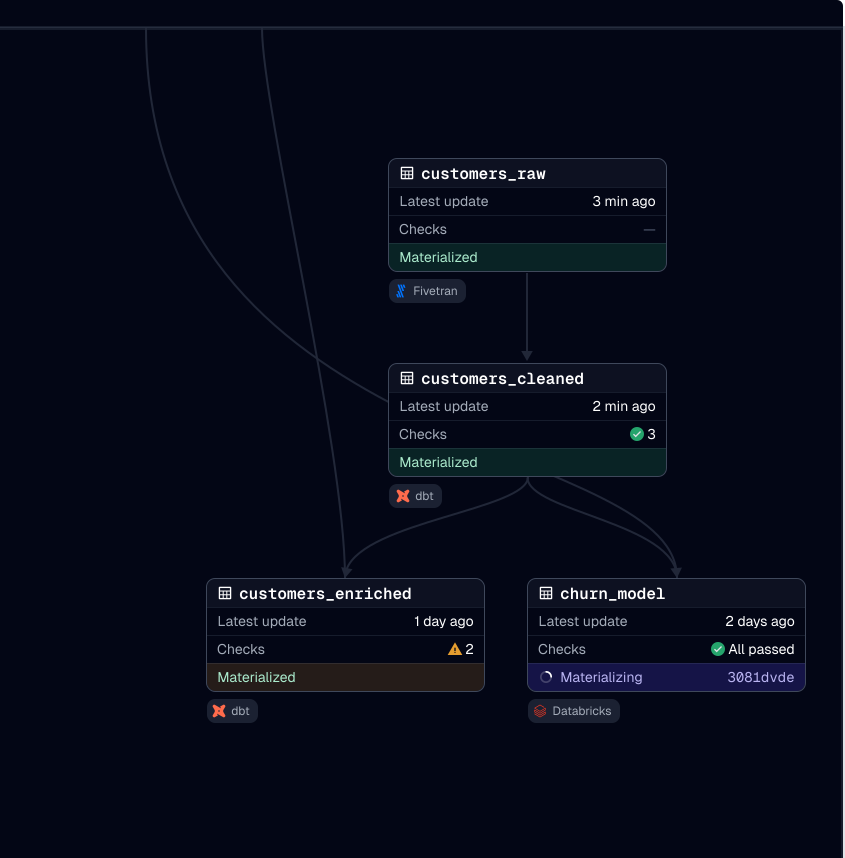
See lineage, dependencies, and data health across your entire platform, not just inside a single tool. Signals become context, and context drives action.
See it in a demo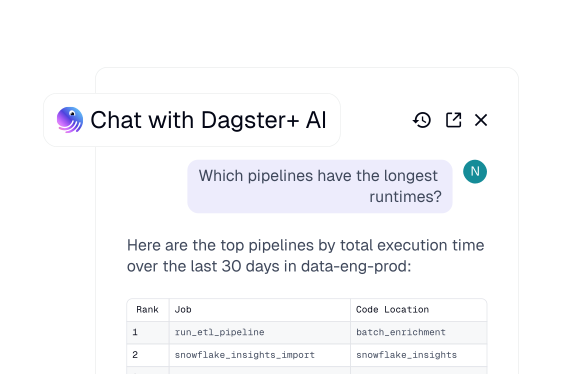
Turn operational context into action with Dagster AI. With Compass, teams can build and ship governed data agents on top of trusted data workflows.
See it in a demo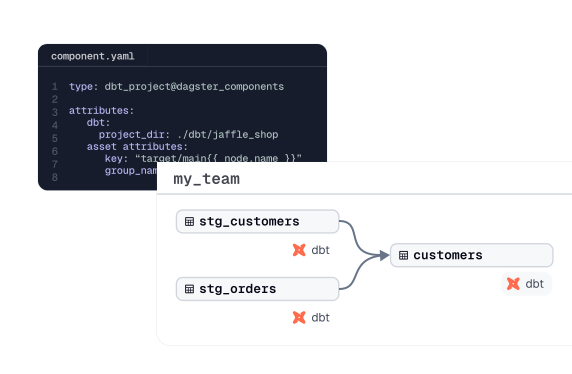
Grow with reusable components, shared standards, and built-in guardrails. As more teams, tools, and workloads come online, your platform becomes more coherent, not more fragile.
See it in a demoHow Dagster thinks
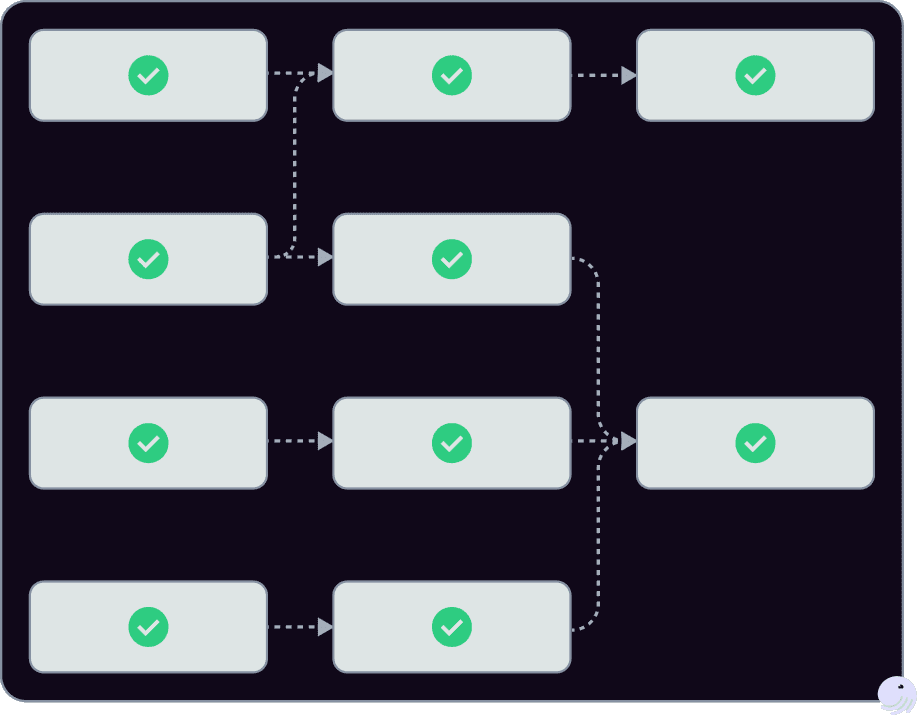
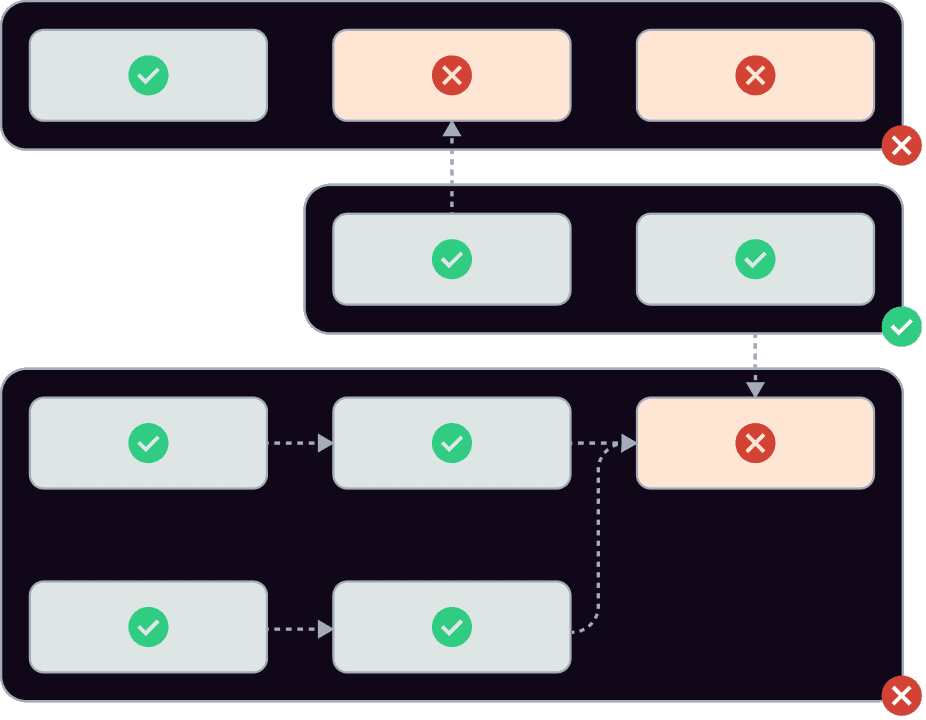
When something breaks in your data, the problem usually isn’t the pipeline, it’s that nobody could see it coming. Dagster attaches lineage, quality signals, and dependency context to every asset so your team always knows the state of their data.
Enterprise-grade, developer-loved
Ship pipeline changes without putting production at risk. Every change validated in a production-like environment before it touches real data.
Platform teams define standards once. Downstream teams and AI-assisted workflows build on top. Consistent, testable, governed by design.
Run compute in your own infrastructure while Dagster manages the control plane. Cloud, on-prem, hybrid, without re-architecting for compliance.
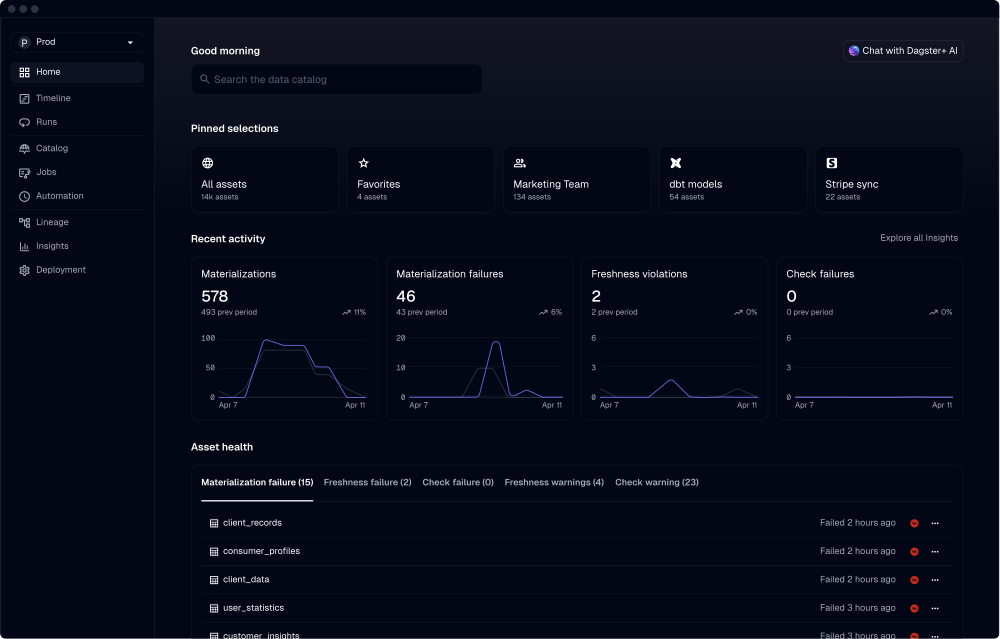
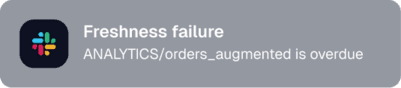
Real-time monitoring, asset health dashboards, and failure context out of the box. Know what broke, why, and what it affects before stakeholders do.
First-class integrations, not bolt-on connectors. Existing dbt models and Snowflake assets orchestrated, monitored, and cataloged without custom glue code.
Local development, fast iteration, a code-native approach ready for LLM and agent workflows. A platform that won't need to be replaced when AI becomes central to the stack.
Get started
Start with the platform that makes your entire data stack coherent, observable, and trustworthy: for your team and for AI.
Dagster is an AI-native DataOps platform that orchestrates, observes, and activates data across your entire stack. Unlike traditional schedulers that only track whether a job finished, Dagster understands the assets those jobs produce by attaching lineage, quality signals, and dependency context to every piece of data your team builds and relies on.
Dagster is asset-centric, Airflow is task-centric. Airflow defines pipelines as sequences of tasks; Dagster defines them by the data assets they produce, so it tracks lineage, surfaces data health and shows the blast radius of a failure before it reaches anyone downstream. Dagster also brings software engineering practice to pipelines: you build and unit-test them on your laptop without running Airflow's infrastructure locally, and branch deployments give every pull request an isolated sandbox that mirrors production instead of testing in production. A data catalog, data quality checks and cost insights are built in, so you need fewer tools alongside your orchestrator.
Yes. With a few lines of code, Dagster can observe and govern the DAGs in all of your Airflow instances from one place, without changing any Airflow code. You can add data quality checks to existing DAGs and build new pipelines in Dagster alongside them.
No. Migrate incrementally with Airlift: integrate your Airflow instances first, build new pipelines in Dagster, then move DAGs over one at a time and shut down legacy Airflow instances when they are empty. You can skip a full Airflow 3 rewrite.
Choose Dagster if you want your orchestrator to understand the data it produces: lineage, freshness, quality and cost per asset, with local testing and a sandbox per pull request. Airflow schedules and runs tasks; Dagster runs them and tells you what broke, why and what depends on it.
Yes. Dagster has first-class, native integrations with dbt, Snowflake, and Fivetran. Existing dbt models and Snowflake assets can be orchestrated, monitored, and cataloged within Dagster without custom glue code. The result is a single operational view across your entire stack, from ingestion to transformation to delivery.
Yes. Dagster supports hybrid deployment, which means you can run compute in your own infrastructure (cloud, on-premises, or hybrid) while Dagster manages the control plane. This lets organizations meet compliance and data residency requirements without re-architecting their entire stack.
Yes. Dagster's core orchestration framework is open source and available on GitHub. You can self-host it, or let us run it for you and get enterprise features like branch deployments, hybrid deployment, role-based access control, cost insights, and built-in observability with a free tier to get started.
Dagster University is a great place to learn about Dagster essentials. You can sign up for a free 30-day trial, and get started on your Dagster journey with this quickstart guide.
Snowflake knows what each query cost. Dagster knows which asset ran it and what depends on it. Now you can buy Dagster through Snowflake Marketplace with the commitment you already have.
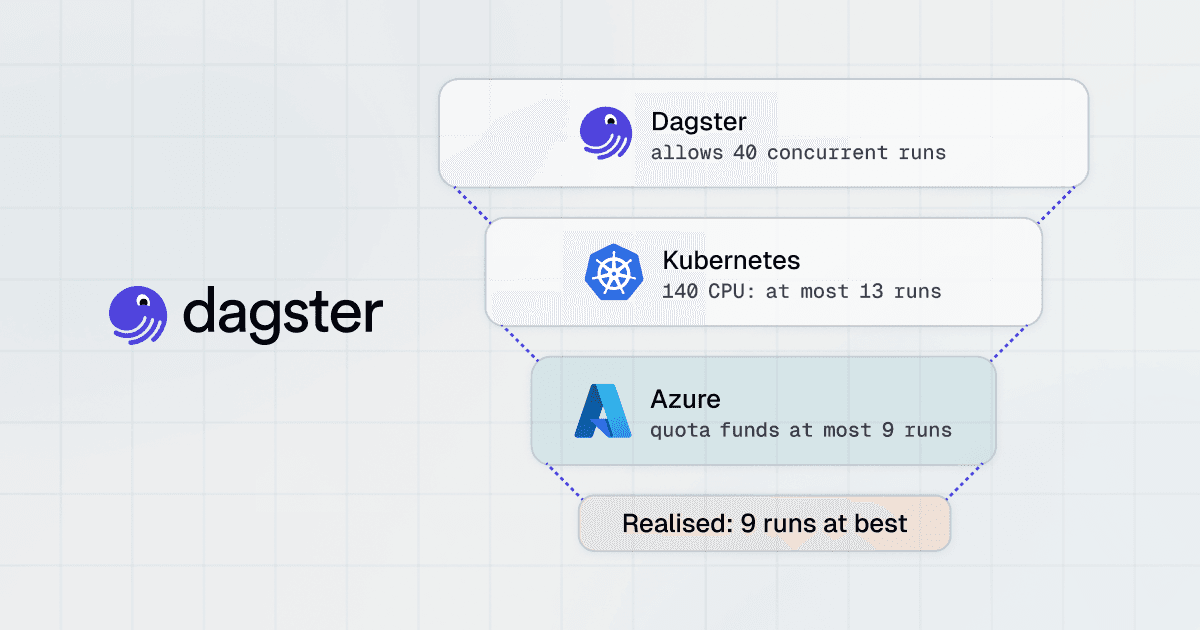
This article draws on a Dagster Hybrid deployment on Kubernetes and Azure at a very large enterprise. It covers the work outside the Helm chart: workload ownership, isolation, networking, identity, sizing, and capacity.
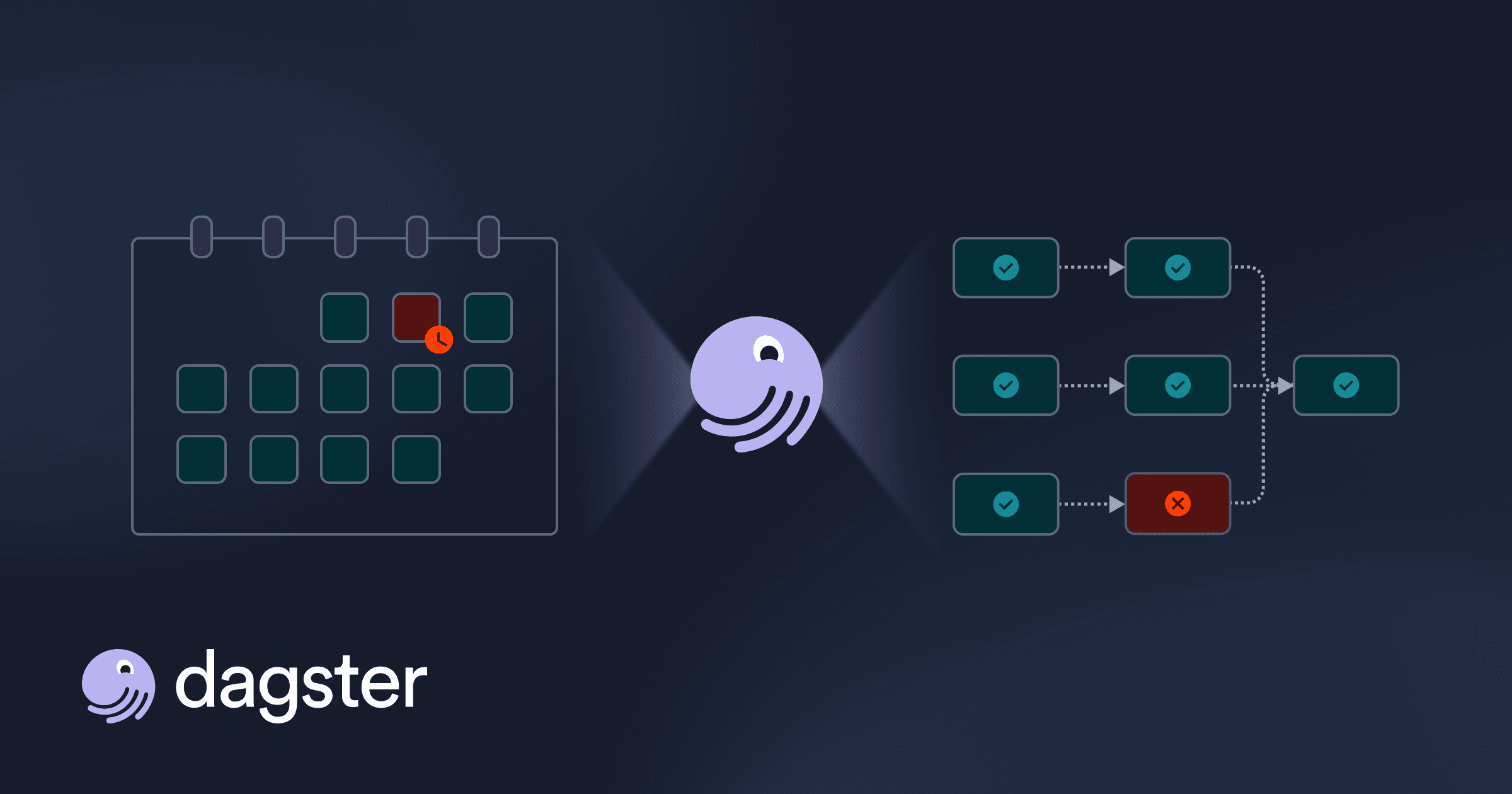
Define the outcome, not the orchestration. Declarative Automation lets you express your desired asset state while Dagster continuously handles the work needed to achieve it.


