Orchestration is More than Scheduling: Declarative Automation in Dagster
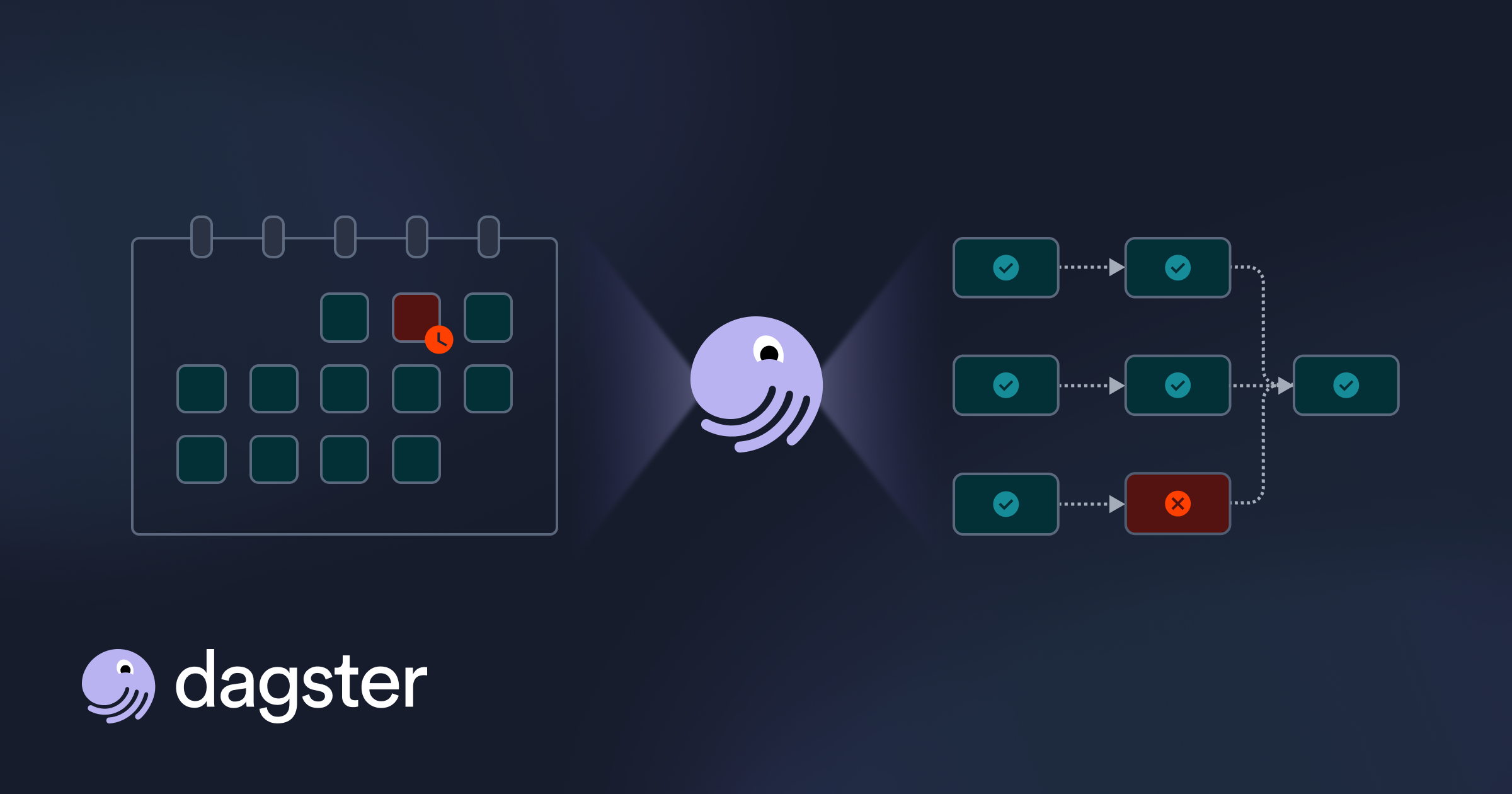
Define the outcome, not the orchestration. Declarative Automation lets you express your desired asset state while Dagster continuously handles the work needed to achieve it.

Showing 12 of 60 articles.
Define the outcome, not the orchestration. Declarative Automation lets you express your desired asset state while Dagster continuously handles the work needed to achieve it.
Some of the most interesting Dagster projects come from the community. This post highlights creative community-built applications.

Some of the most interesting Dagster projects come from the community. This post highlights creative community-built applications.
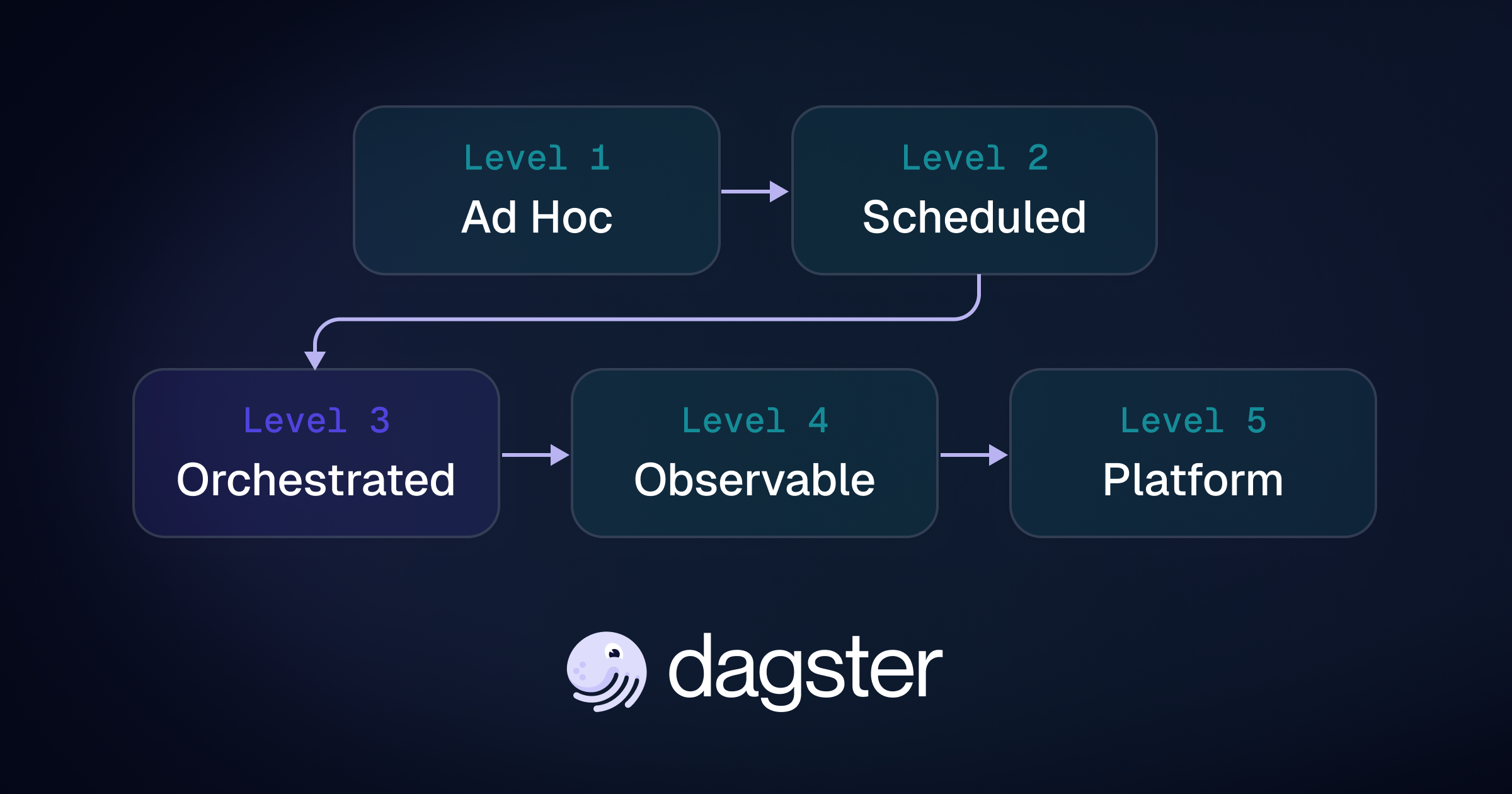
Mature orchestration environments often work operationally while still leaving critical data dependencies implicit. This post introduces the Orchestration Maturity Model, explains the architectural ceiling of job-centric systems, and shows how Dagster’s asset-aware approach helps teams reason about freshness, lineage, quality, and self-service at enterprise scale.
Some of the most interesting Dagster projects come from the community. This post highlights creative community-built applications.

Text-to-analytics promises self-service access to data, but adoption depends on usability, governance, and trust. In this guest post, Brooklyn Data explains how it evaluated Compass, deployed it on top of Snowflake, and enabled teams to answer operational questions directly in Slack while maintaining centralized governance and business context.

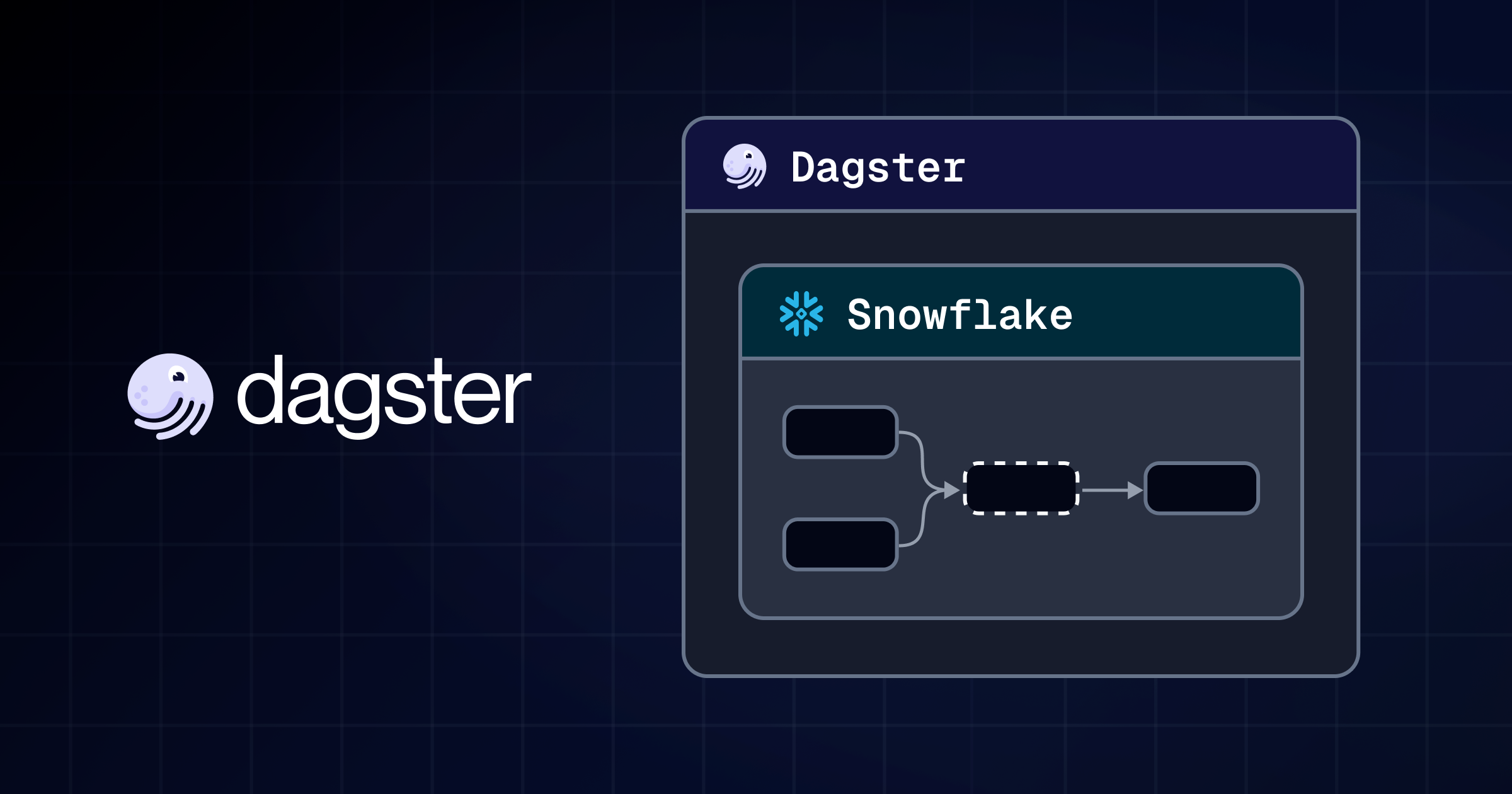
Snowflake increasingly handles transformation and data freshness internally through features like Dynamic Tables and Cortex. Dagster complements Snowflake by providing orchestration, lineage, automation, and cost visibility across your broader data platform from SQL-defined assets to downstream automation and Snowflake query attribution.
The Dagster+ Terraform provider lets platform teams manage deployments, access controls, alerting, and more as code. Define entire environments declaratively, review changes through pull requests, and integrate Dagster+ into your existing infrastructure workflows.
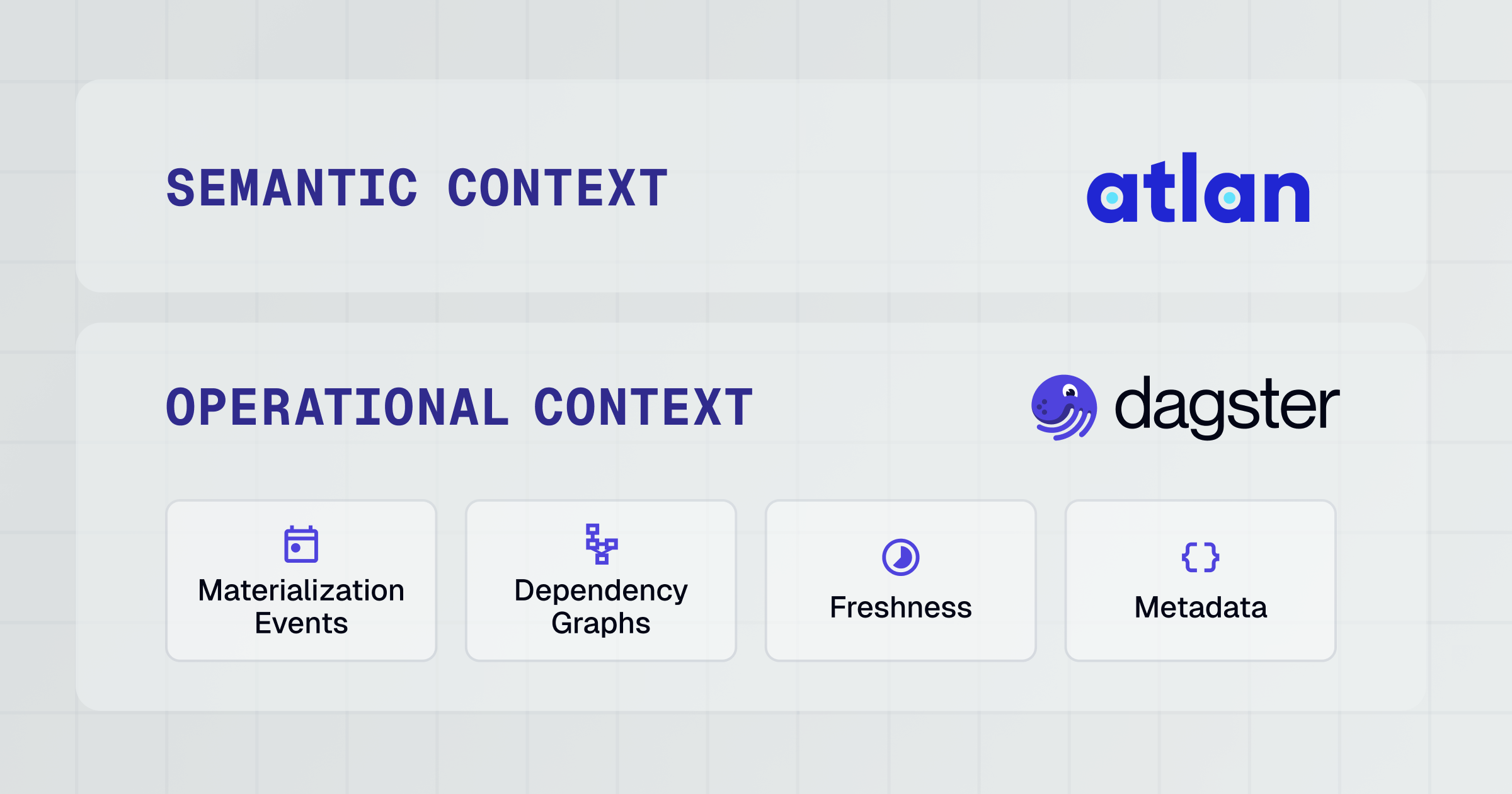
AI agents that only understand business definitions without knowing whether the underlying pipeline actually succeeded are confidently wrong and operational context from the orchestrator is the missing piece.

AI has made contributing to open source easier but reviewing contributions is still hard. At Dagster, we’re improving the contributor experience with smarter review tooling, clearer guidelines, and a focus on contributions that are easier to evaluate, merge, and maintain.
Standardizing on Databricks is a smart strategic move, but consolidation alone does not create a working operating model across teams, tools, and downstream systems. By pairing Databricks and Unity Catalog with Dagster, enterprises can add the coordination layer needed for dependency visibility, end-to-end lineage, and faster, more confident delivery at scale.
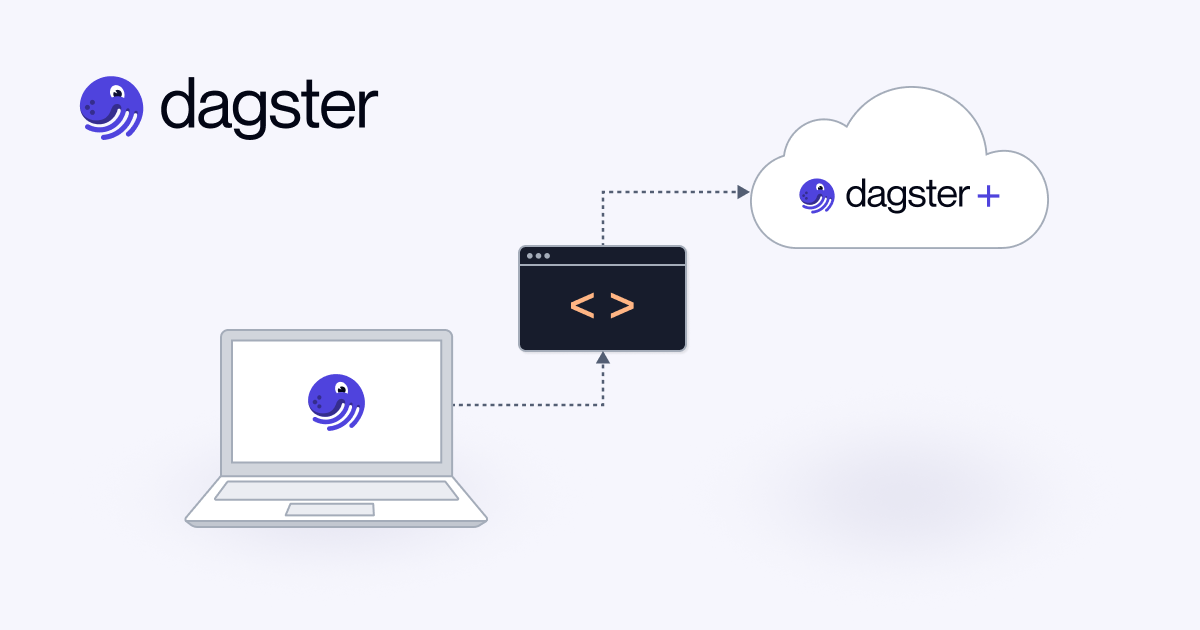
Dagster OSS is built for builders. But as teams grow, the operational burden of running the platform can quietly consume engineering time. This guide explains when it makes sense to move to Dagster+ and shift your focus back to building data products.
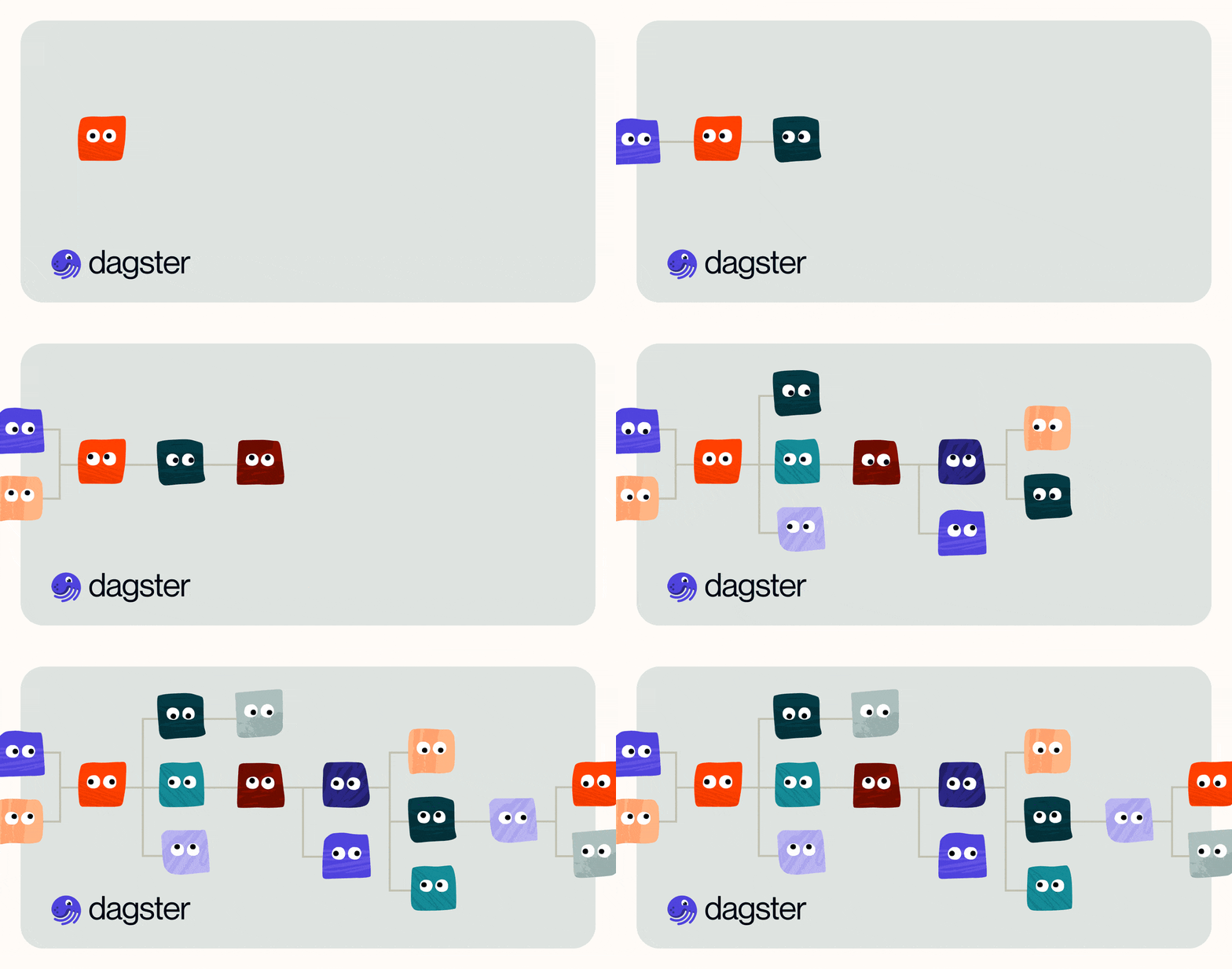
We set out to explain Dagster assets in the simplest possible way: as living characters that wait, react, and change with their dependencies. By designing a children’s book with warmth, visuals, and motion, we rediscovered what makes assets compelling in the first place.
Detection isn't the bottleneck anymore. Understanding is. Compass closes the loop by turning Dagster+ operational data into a conversation.
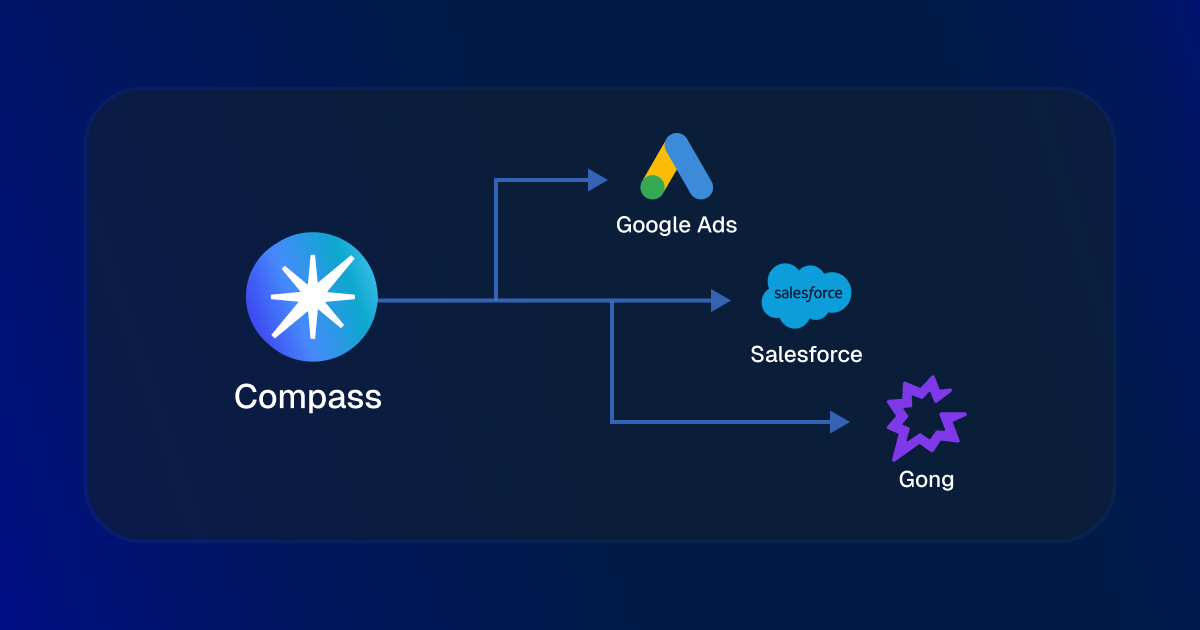
Compass now connects directly to your go-to-market tools, letting you ask questions about pipeline, ad spend, and sales conversations in Slack without exporting CSVs or waiting on the data team.
Once the model is trained, the final step is getting it into users’ hands. This guide walks through turning your model into a fast, reliable RunPod endpoint—complete with orchestration and automated updates from Dagster.
Automatically sync asset materialization events and lineage from Dagster Cloud to Atlan
Training an LLM isn’t one job—it’s a sequence of carefully managed stages. This part shows how Dagster coordinates your training steps on RunPod so every experiment is reproducible, scalable, and GPU-efficient.
Every great model starts with great data. This first part walks through how to structure ingestion with Dagster, prepare your text corpus, and build a tokenizer that shapes how your model understands the world.
Compass now supports every major data warehouse. Connect your own data and get AI-powered answers directly in Slack, with your governance intact and your data staying exactly where it is.
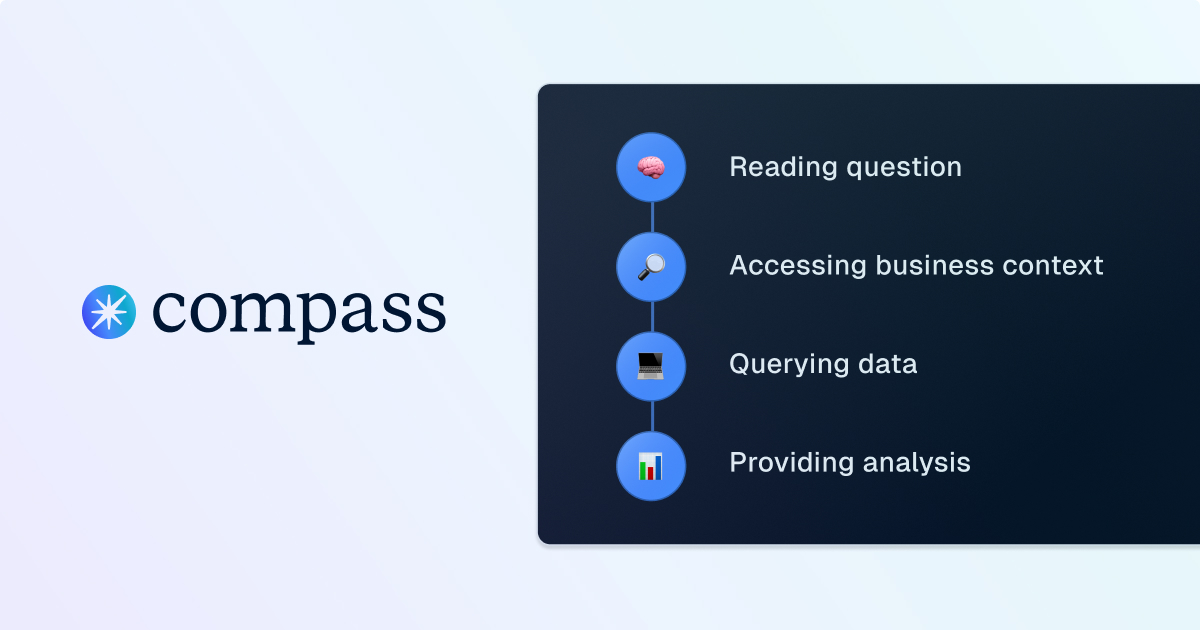
Go behind the scenes of Compass, Dagster’s analyst copilot, to see how it transforms plain-language questions into precise, optimized SQL queries. Learn how each step of the query-generation process helps analysts move faster and stay focused on insights.
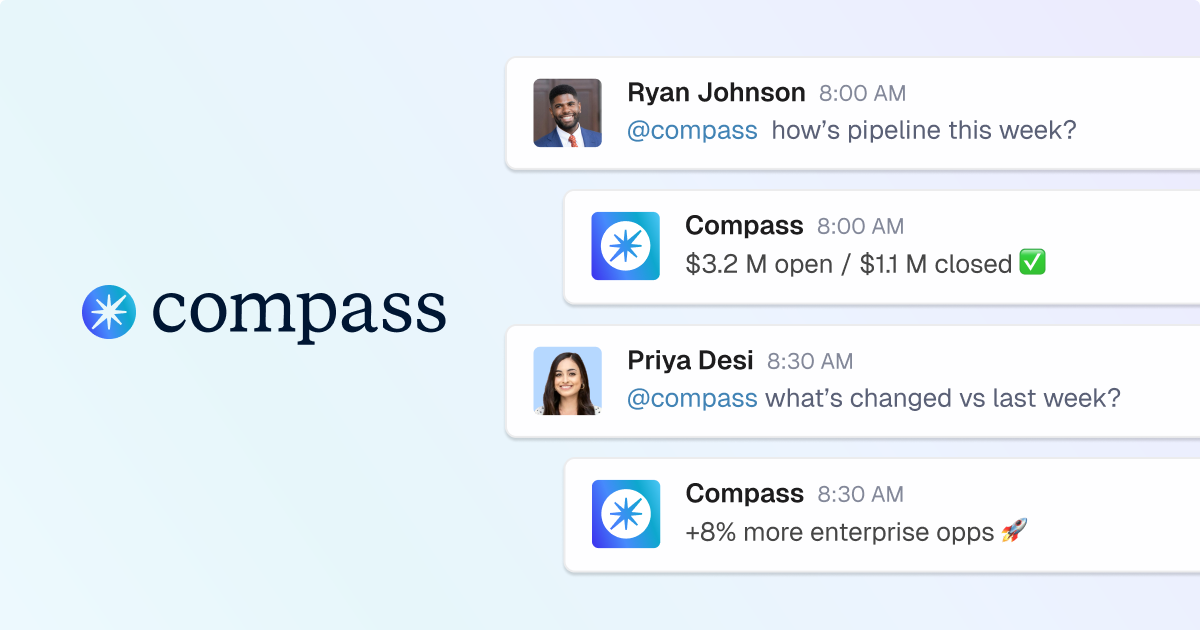
Learn how to maximize the impact of your data stack with a lean team—keeping your analysts at the heart of every decision.

Empowering engineers with flexibility and analysts with accessibility
Featuring YAML-based pipeline definitions, plug-and-play integrations, automatic documentation, and a unified CLI experience.

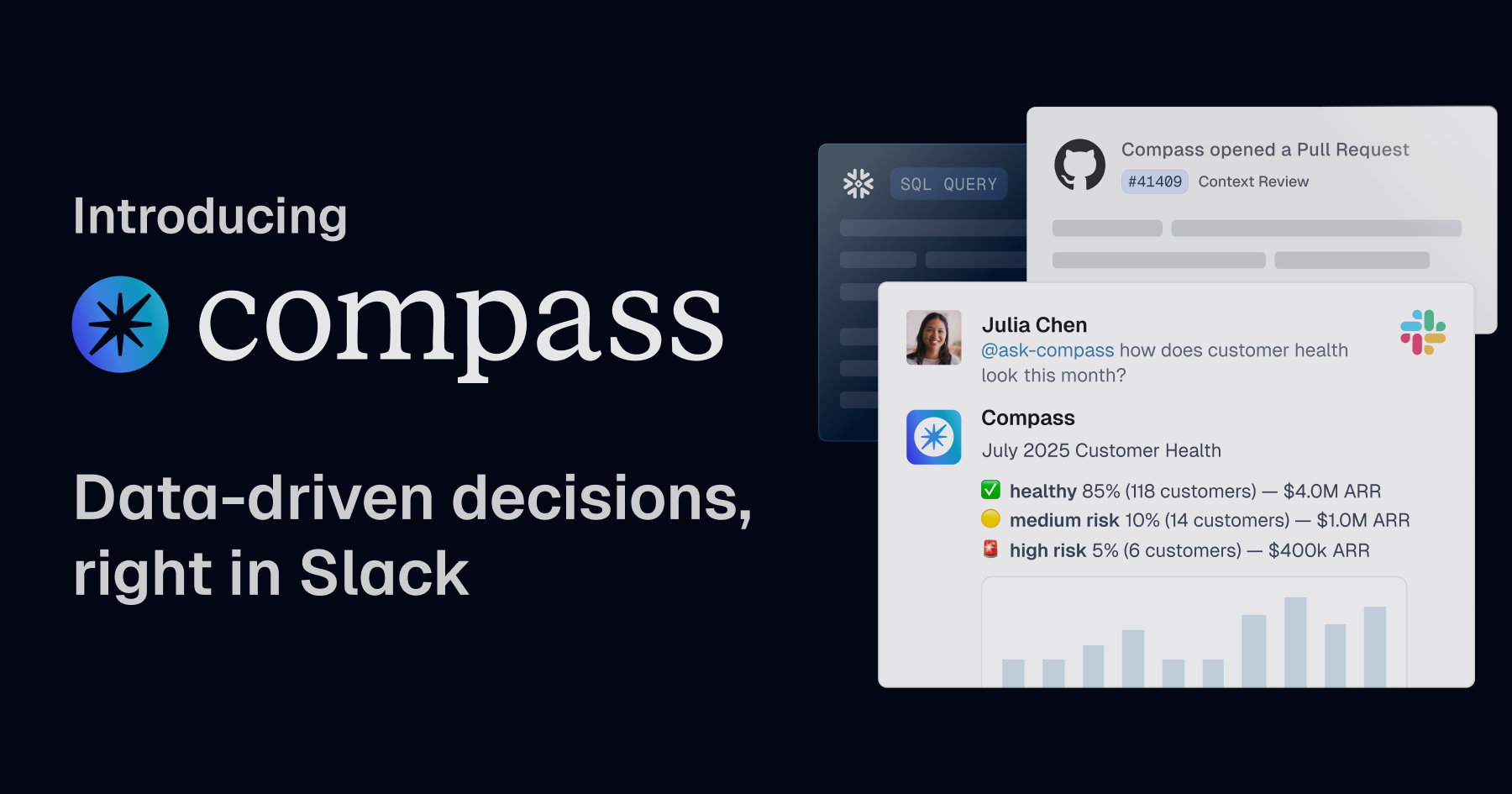
Converse with your company's data right in Dagster. Compass moves beyond static dashboards by enabling a natural language, two-way conversation with your data. This allows anyone to ask follow-up questions, incorporate their own business context, and achieve true data fluency without writing a single line of SQL.

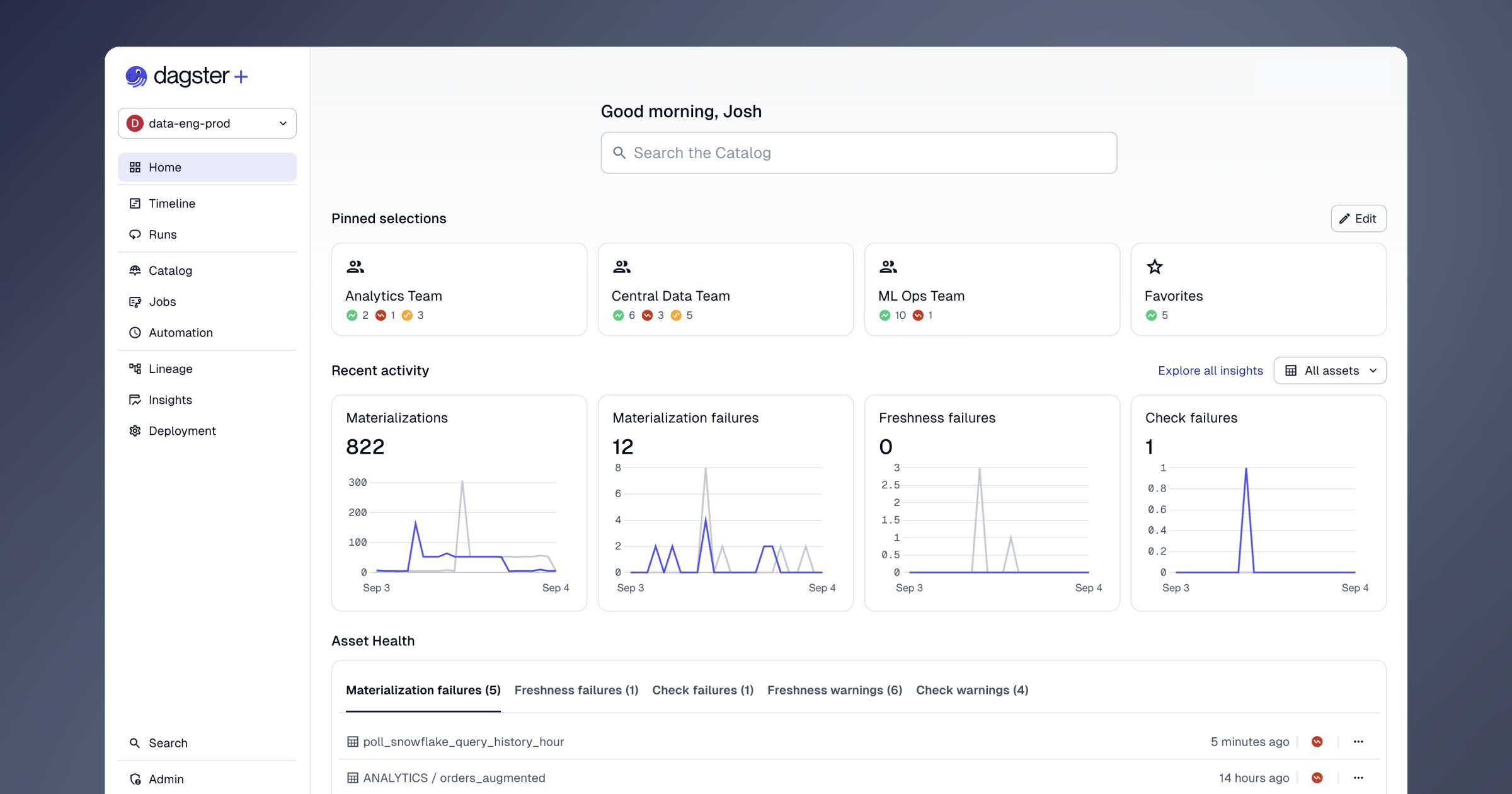
Featuring a new modern homepage, enhanced asset health and freshness monitoring, customizable dashboards, and real-time insights with cost monitoring.

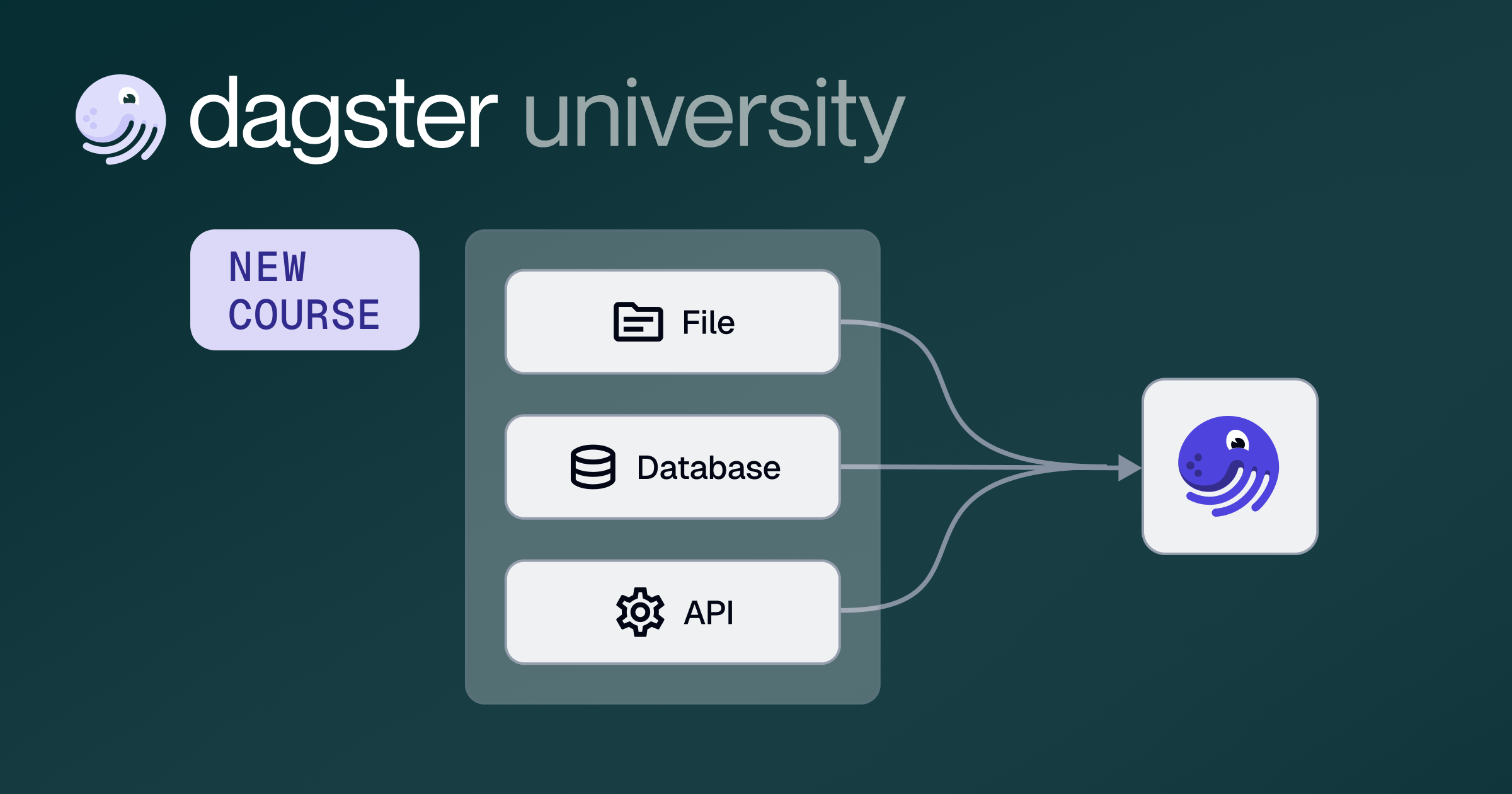
Dagster is excited to announce the launch of ETL with Dagster, a comprehensive seven-lesson course. This free course guides you through practical ETL implementation and architectural considerations, from single-file ingestion to full-scale database replication
AI engineering is data engineering. Here are 5 best practices the former should adopt from the latter to succeed.

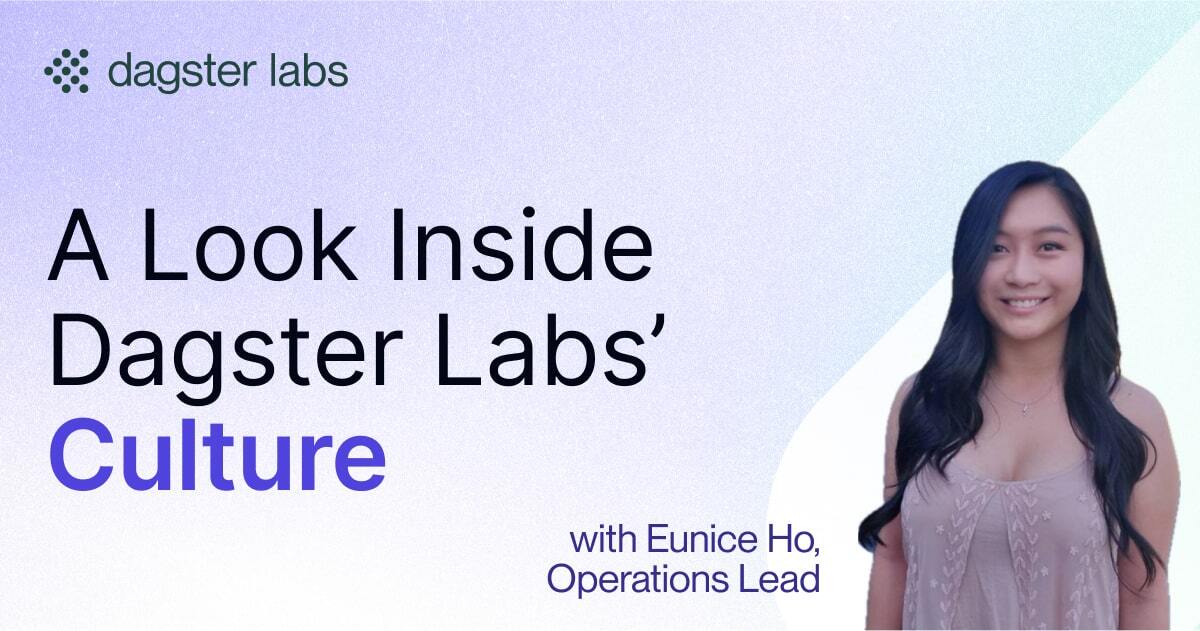
Operations Lead Eunice Ho dives into the Dagster Labs culture and why it makes for an ideal work environment.

Get to know the tool that sets the standard for modern data orchestration.
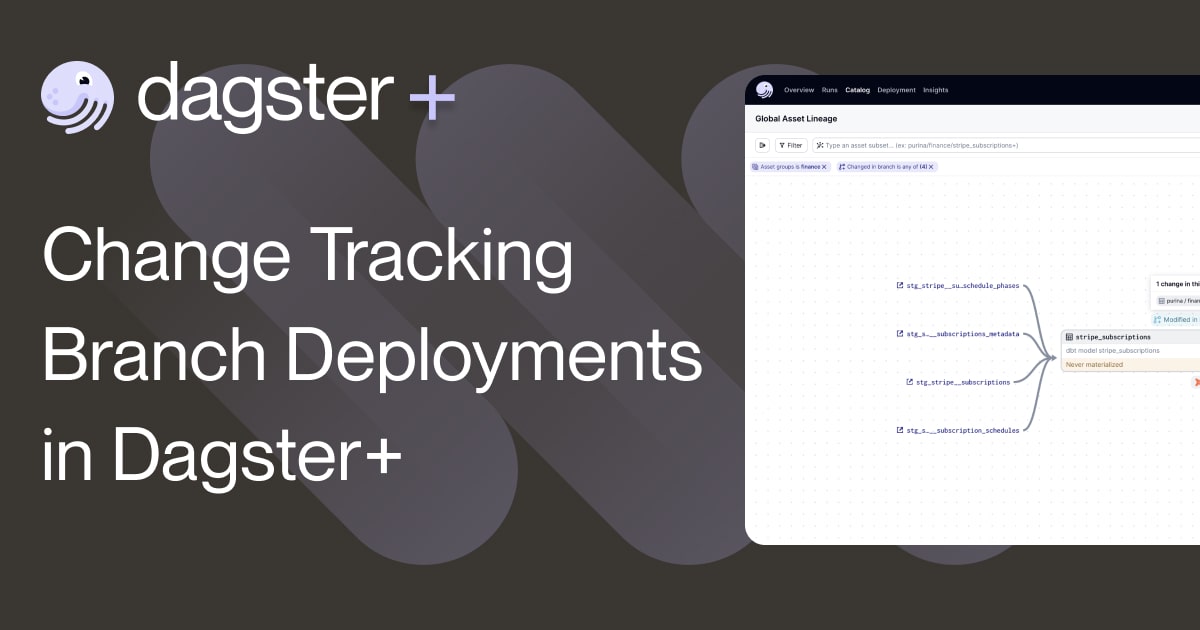
Dagster+ further enhances identification and collaboration around changes to your data pipelines.

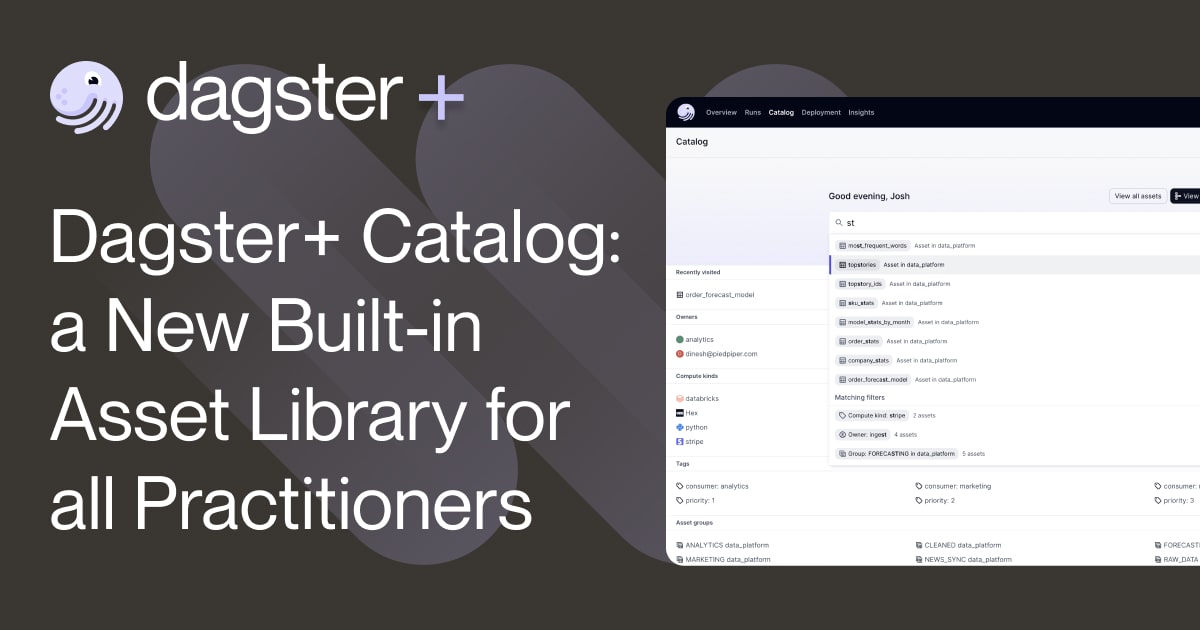
Give your data teams a powerful new system of record without the overhead of maintaining a third-party catalog.

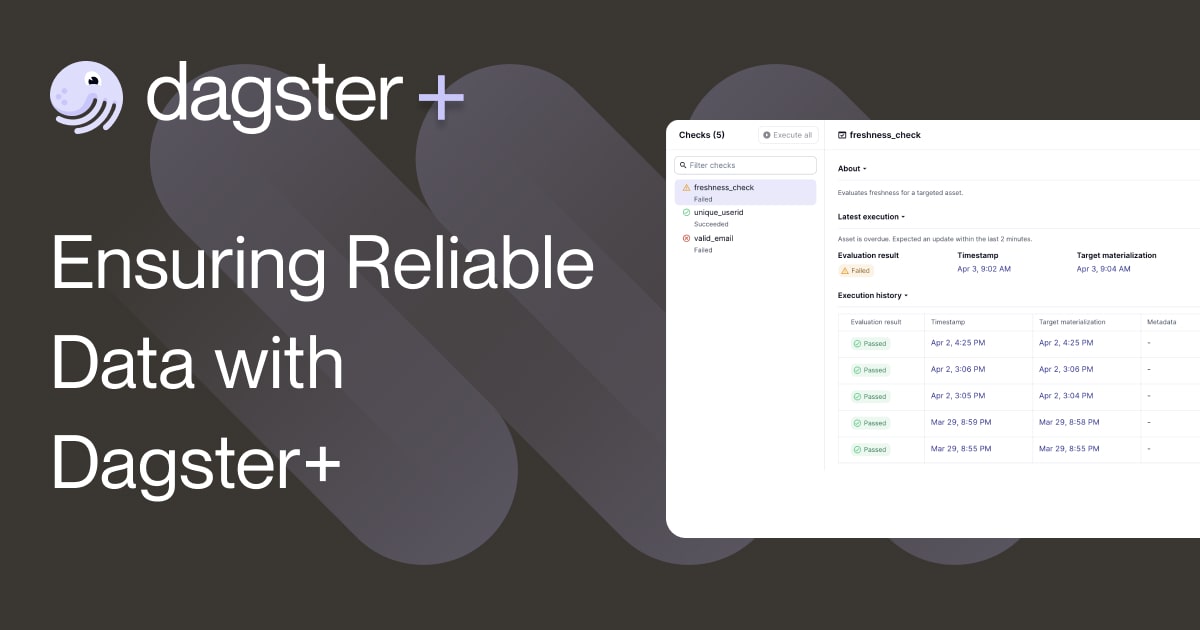
Dagster+ helps you monitor the freshness, quality, and schema of your data.

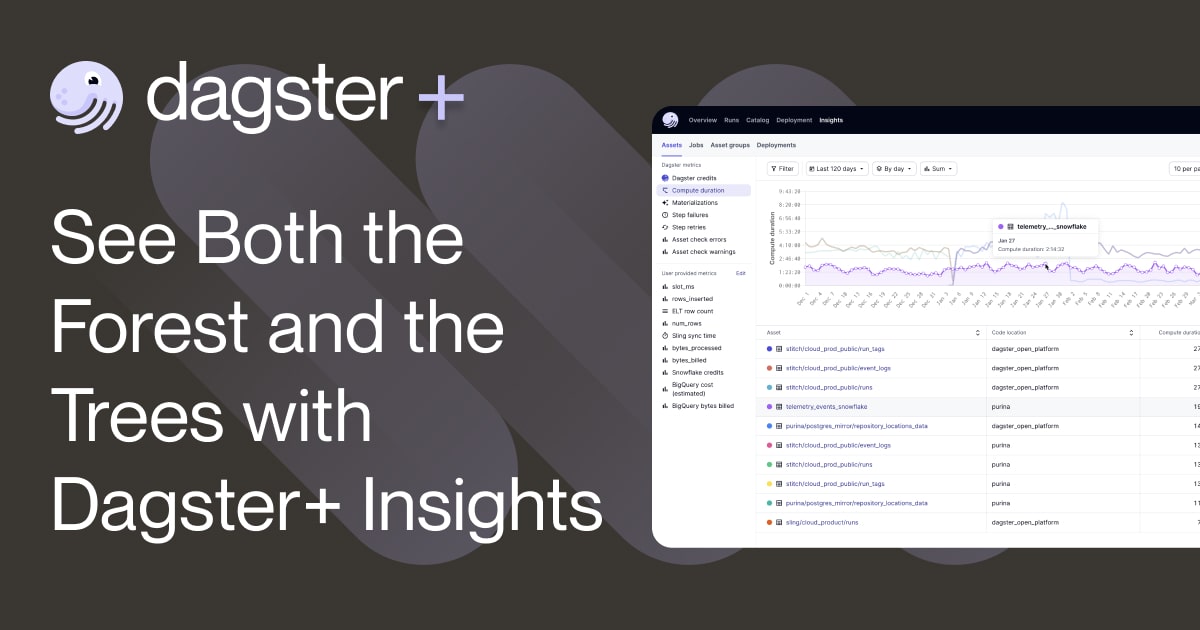
How Dagster+ Insights helps you control costs and elevate your data platform’s observability.

How we saved $40k and gained better control over our ingestion steps.

The beliefs that organizations adopt about the way their data platforms should function influence their outcomes. Here are ours.
We’re excited and humbled to bring the Retain.ai organization into our fold to help build out Dagster’s data orchestration capabilities.
Load messy data sources into well-structured tables or datasets, through automatic schema inference and evolution.
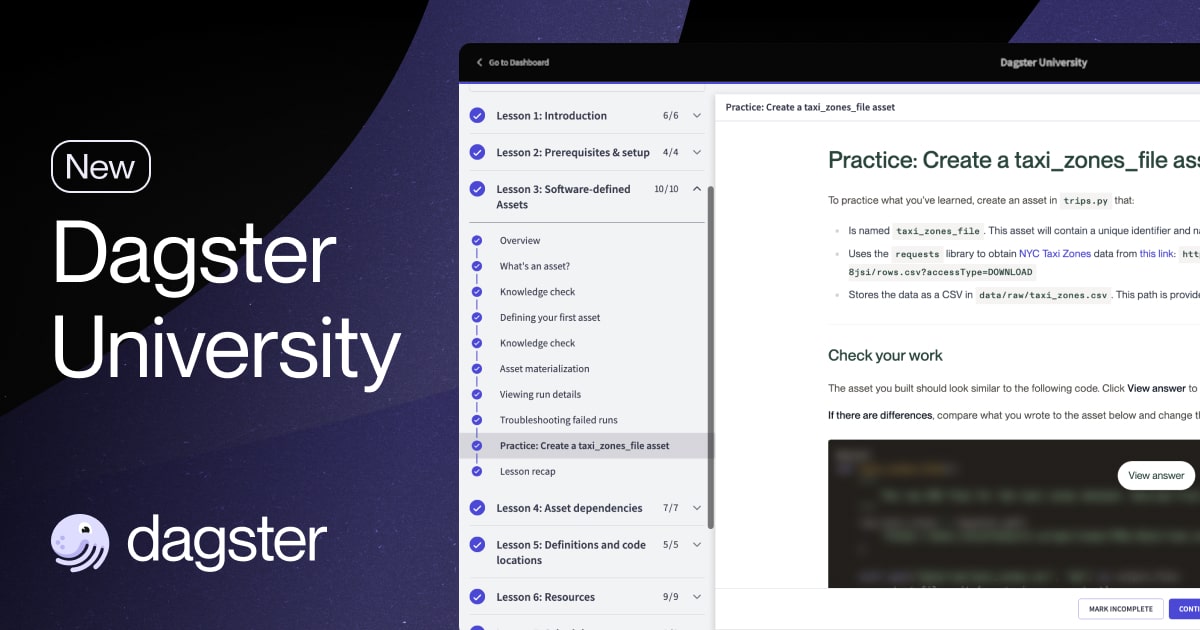
Learn Dagster essentials and build asset-based data pipelines with Dagster University, our new self-guided course for beginners.

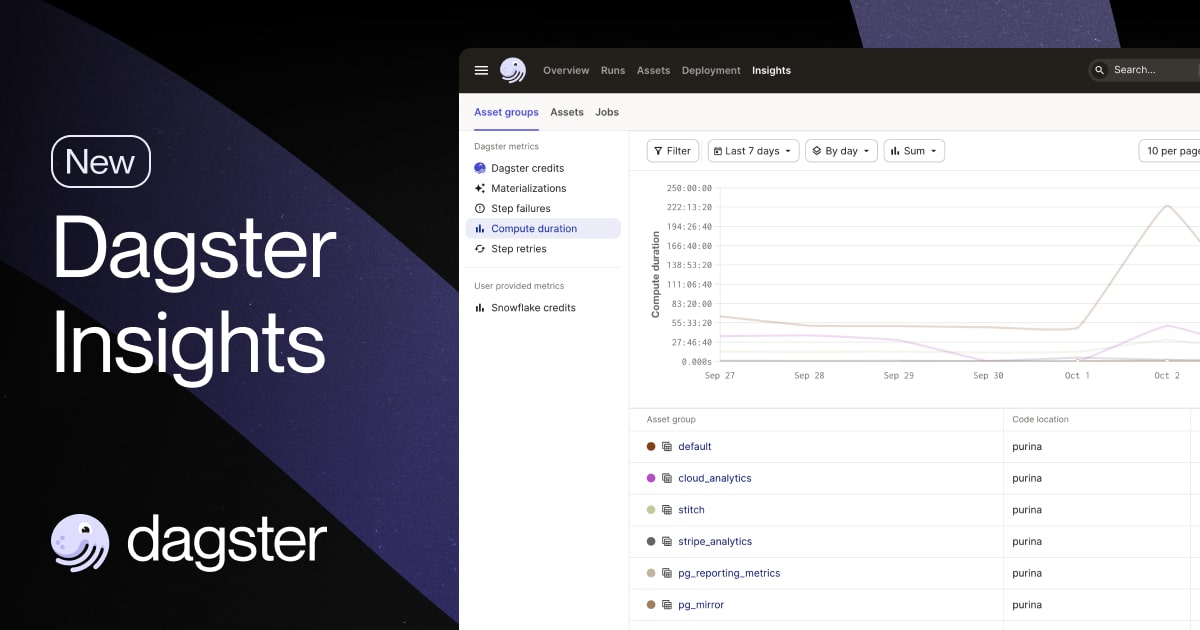
Gain operational observability on your data pipelines and bring cloud costs back under control with the Dagster Insights feature.
Launch Week kicks off October 9th with new functionality being shared each day. Our theme: Escaping the Modern Data Trap!
It is not every day you get to join a company working on building a product purpose-built for you.

In the spirit of simplification, the company formerly known as Elementl is now doing business as Dagster Labs.

Elementl CEO Pete Hunt shares the three priorities that guide how we will evolve Dagster.
Recent enhancements allow Dagster to surface clearer and more actionable errors to accelerate your development cycles.

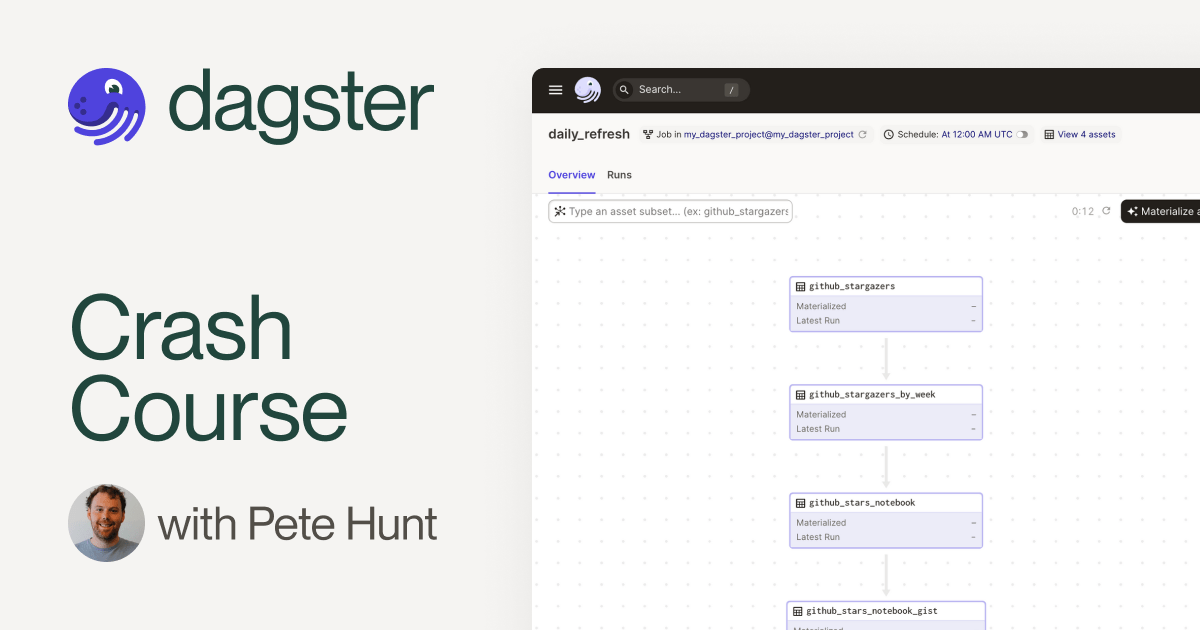
If you are looking to get up and running with Dagster in 10 minutes or less, this is a good place to start. Buckle up.
The enterprise orchestration platform that puts developer experience first: hybrid or serverless deployments, native branching, and out-of-the-box CI/CD.
Elementl, the company behind the Dagster data orchestration tool achieves SOC2 compliance.

The release of Dagster 1.0 and the GA launch of Dagster Cloud represent major milestones in the evolution of our orchestration solution.
Pete Hunt discusses what caused him to make the leap from Twitter to Elementl.
The Unbundling of Airflow' argued that modern data stack solutions (data ingestion, data transformation, reverse ETL) manage their own data orchestration. Data teams need is a control plane for the modern data stack.